HOMEihenan NEWS CENTER Voice of Henan

Henan's Universities Speed Up Internationalization: From 'Bringing In' to 'Going Global'

Source:HAUT | 2026-10-22 15:09

In a grain-and-oil laboratory, international doctoral students from Pakistan and Sudan are tackling research challenges in grain science and technology. At a high-level forum, young American agricultural professionals from Harvard and Yale sit alongside Chinese experts to discuss the future of nutrition-oriented agriculture. In a training classroom, grain technology officials from dozens of African and Asian developing countries take careful notes. One university, three scenes—each illustrating a different facet of international education at Henan University of Technology (HAUT), and together offering a snapshot of how Henan's universities have accelerated their internationalization efforts in recent years.

China's "15th Five-Year Plan" calls for deepening the integrated reforms for education, science, technology and talent development. For Henan's universities, international education serves as both a tangible path to implement this national strategy and a key lever for building a differentiated, competitive edge based on their own distinctive features.
Bringing In: From Scaling Up to Raising Quality

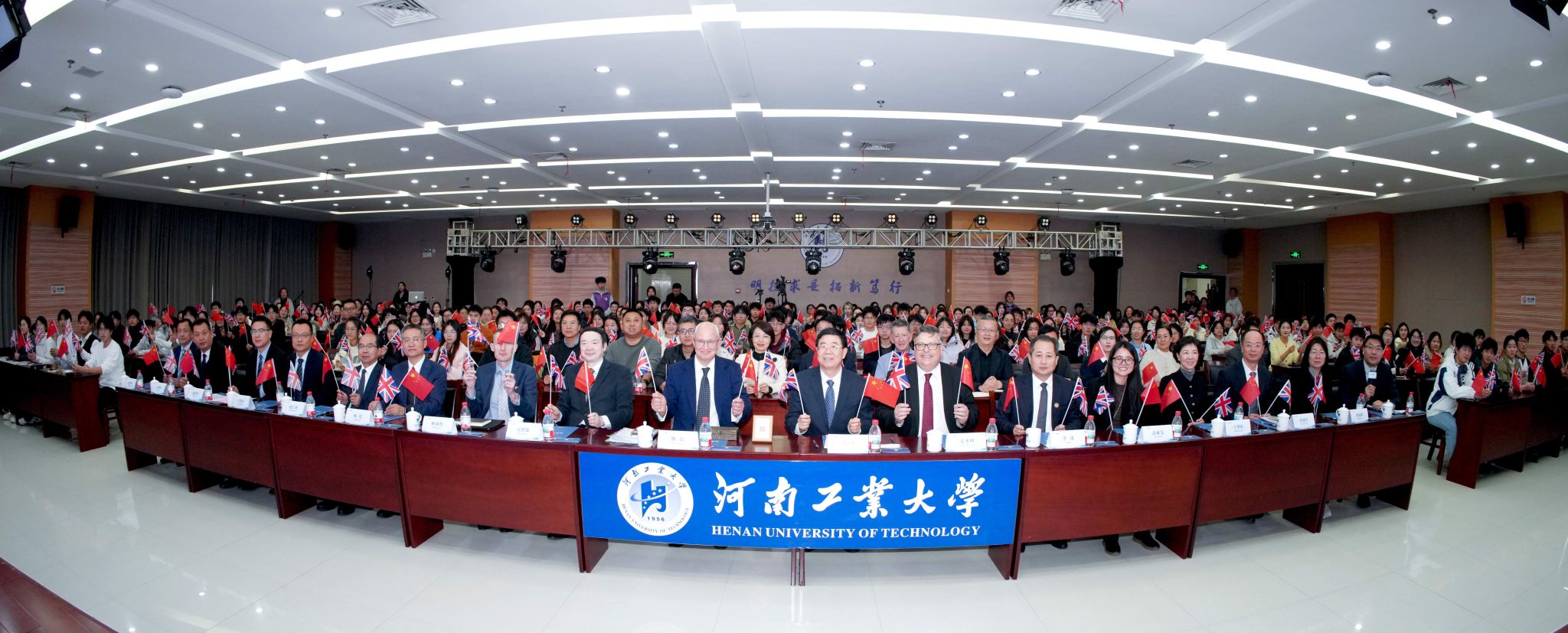
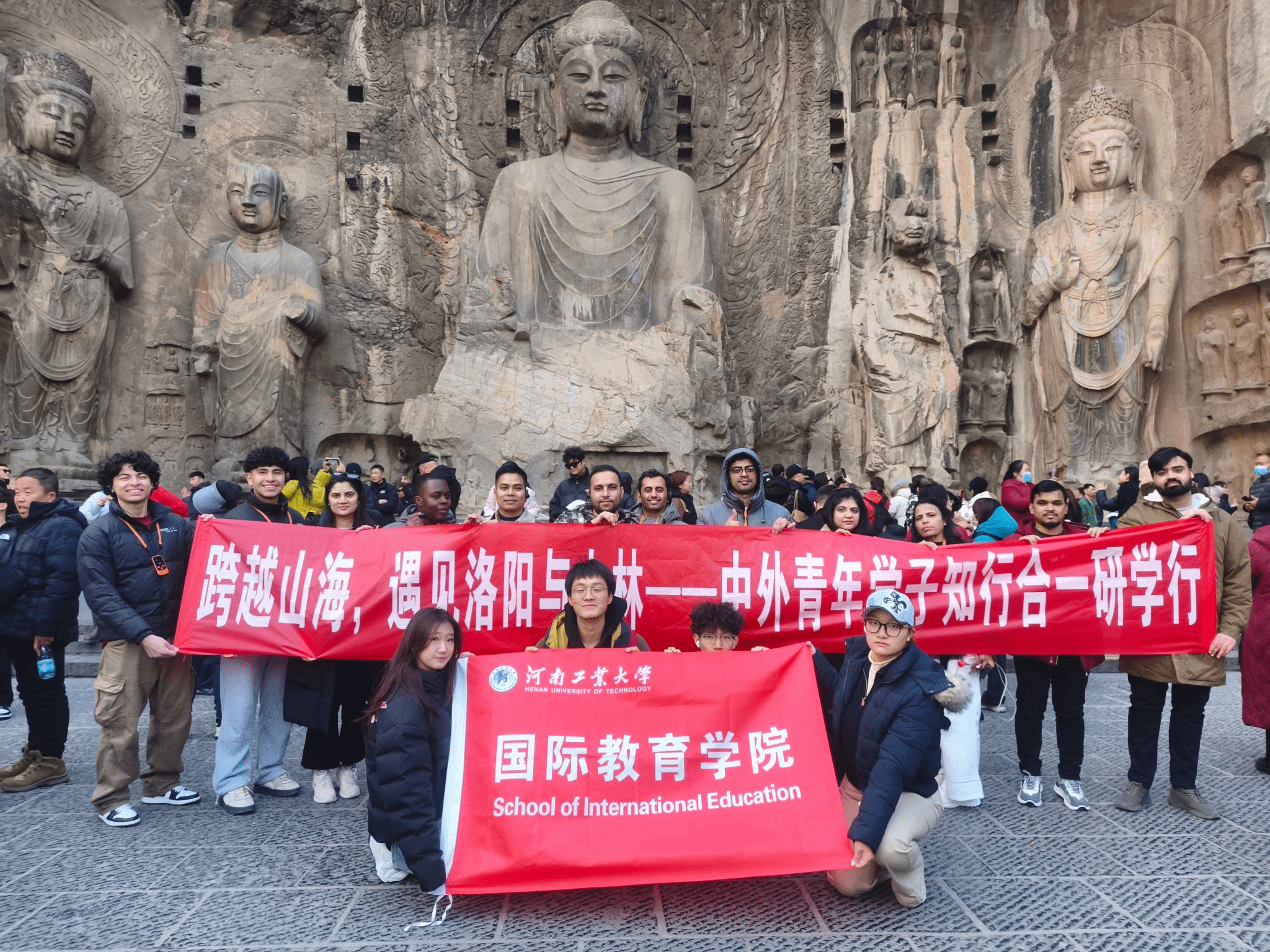
Over the past two decades, education for international students studying in China has evolved from scratch into a well‑established program at Henan's universities. Take HAUT as an example: this university began enrolling international students in 2004 and has since trained nearly a thousand students from more than 30 countries and regions. It currently hosts several hundred international students at the doctoral, master's, and bachelor's levels across 13 schools and 33 majors—ranking third in Henan Province in terms of international student enrollment.

Beyond growth in numbers, quality has kept pace. Drawing on its strength in grain and oil food science, HAUT has recruited international students strategically. Its Food Science and Engineering program has passed China's Engineering Education Accreditation, meeting the international mutual-recognition standard of the Washington Accord. Through joint programs with the University of Reading in the UK, HAUT has introduced overseas faculty and full English-language instruction. Partnerships with the UN Food and Agriculture Organization (FAO), the U.S. Wheat Associates (USW), and the Canadian Grain Commission (CGC), among others, have created pathways for international students into the global grain industry.
留学生洛阳研学.png

Going Global: From Foreign-Aid Training to Major-Power Dialogue

Beyond "bringing in", HAUT has also accumulated solid achievements in "going global". Since 2008, it has undertaken human-resource development cooperation projects run by the Ministry of Commerce aimed at developing countries—making it the only designated national provider of foreign‑aid training programs in Henan Province. To date, it has trained nearly 3,000 participant visits of government officials, managers, and technical personnel from 108 developing countries. In 2025, the university hosted Henan's first‑ever series of three grain‑focused foreign‑aid training programs, bringing together 89 grain-sector officials and experts from 23 countries across Asia, Africa, North America, and South America in Zhengzhou. Trainee representatives from Honduras, Nepal, and the Democratic Republic of the Congo all expressed their intention to translate what they had learned into action to promote the development of their home countries' grain industries.

This June, this university's international cooperation took a significant step forward. On June 16, the 2026 Heartland Connect & U.S.-China Agriculture Roundtable, themed "Cultivating Win-Win Cooperation, Sharing Peace and Prosperity", was held in Zhengzhou. Co-hosted by the Chinese People's Association for Friendship with Foreign Countries (CPAFFC) and the Henan Provincial People's Government, this dialogue serves as an important platform for implementing the consensus reached at the meeting between Chinese and U.S. heads of state. It brought together more than 200 representatives from agricultural institutions, leading enterprises, and universities at home and abroad. Participants came from more than 20 U.S. agricultural heartland states, as well as Henan and four other Chinese provinces.

As a university with distinctive strengths in the national grain industry, HAUT took the lead in hosting the event's parallel sub‑forum on "Dietary Health and Nutrition‑oriented Agriculture". The forum brought together experts from both China and the U.S. for in-depth discussions on chronic-disease dietary prevention, nutrition-oriented wheat breeding, and moderate food processing. Participating experts reached a consensus: the two countries can establish regular mechanisms for scientific research and industrial cooperation in grain security, food processing, and nutrition and health.

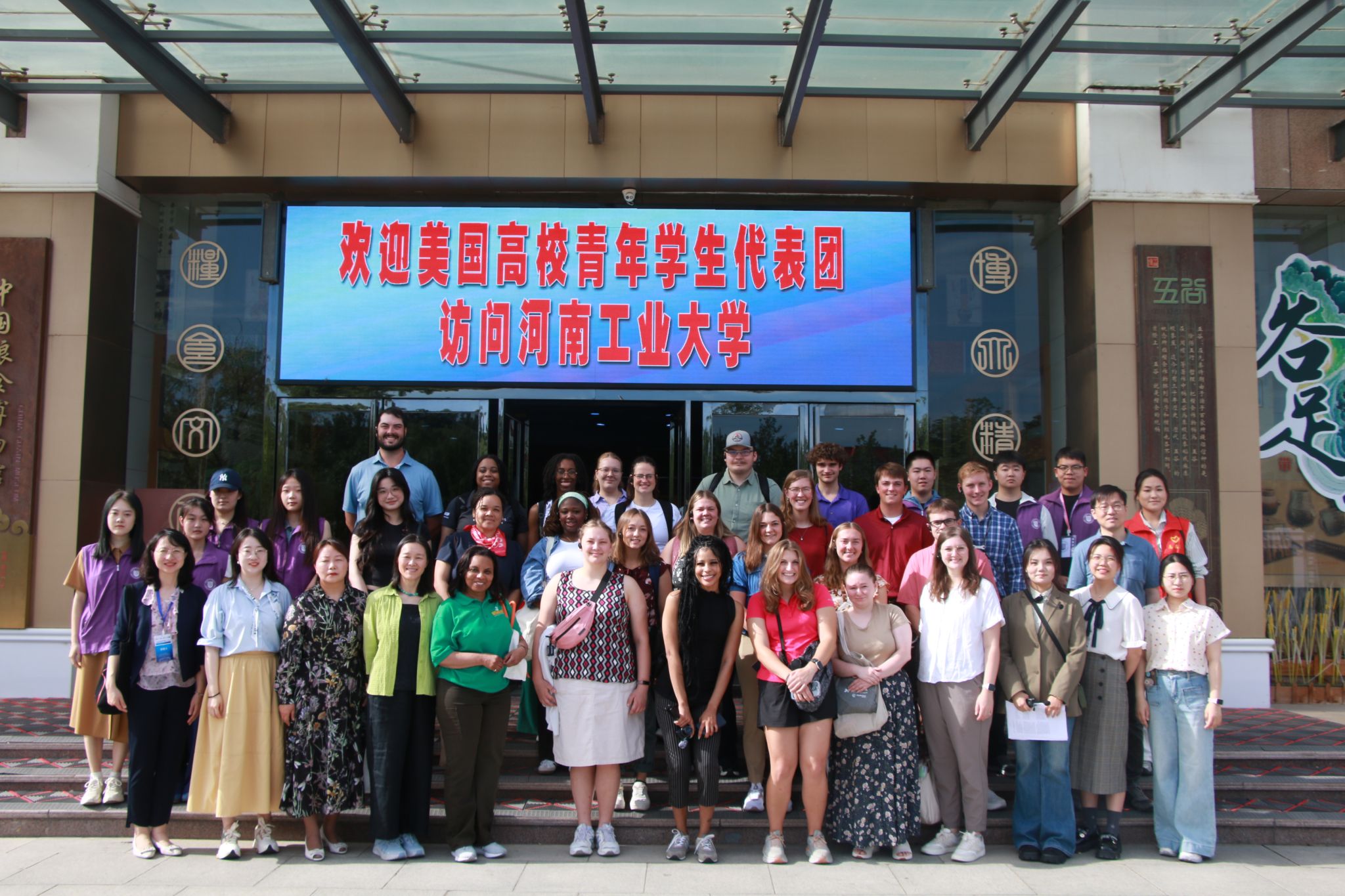
That same day, the U.S. Heartland China Association (a U.S. nonprofit promoting subnational exchanges) led a delegation of 21 young American agricultural representatives to visit the university—HAUT being the only university on the delegation's in‑person Henan itinerary. Delegation members came from 13 U.S. states and prestigious institutions including Harvard, Yale, Michigan State, Purdue, and the University of Wisconsin-Madison. The delegation toured the National Engineering Research Center of Wheat and Corn Further Processing and the Stored-Product Insect Specimen Museum, experienced instant-noodle processing techniques, and engaged in cultural exchanges with Chinese students. At the close of the event, the two sides jointly issued a "Heart-to-Heart" Joint Declaration, establishing ongoing cooperative ties covering agricultural academic dialogue, faculty and student exchanges, and youth exchanges.
美国腹地中国协会.jpg

Disciplinary Distinctiveness Is the Foundation of Internationalization

Tracing the development of HAUT's international education, one main thread runs consistently clear: disciplinary distinctiveness is the foundation on which the university builds itself into a high-level institution and steps onto the world stage.

Henan is a major national grain-producing province, and HAUT possesses the most complete grain-and-oil food discipline cluster in the country. It has maintained 40 years of sustained cooperation with Kansas State University in the U.S. and has maintained long-term partnerships with international institutions including the UN World Food Programme (WFP), the International Association for Cereal Science and Technology (ICC), and the U.S. Soybean Export Council (USSEC). These accumulated efforts are the foundation that has enabled the university to attract international students from more than 30 countries and regions, train personnel from 108 developing countries, and host the China-U.S. high-level dialogue forum.

This path also offers a model for other universities in Henan: international education is not simply about the movement of people, but about being underpinned by genuine disciplinary strength—identifying the university's position on the map of international cooperation and creating an effective continuum from talent development to research cooperation to industry alignment.

Henan's "15th Five-Year Plan" clearly calls for building a province strong in science and education and enhancing the overall effectiveness of its innovation system. Against this backdrop, advancing universities' international education from "bringing in" toward "going global" will be an important direction for Henan's universities to serve the nation's opening-up strategy and enhance their own competitiveness.

(The author is Party Secretary of the School of International Education at HAUT, PhD, Associate Professor)

share

Henan's Universities Speed Up Internationalization: From 'Bringing In' to 'Going Global'

HAUT2026-10-22 15:09

In a grain-and-oil laboratory, international doctoral students from Pakistan and Sudan are tackling research challenges in grain science and technology. At a high-level forum, young American agricultural professionals from Harvard and Yale sit alongside Chinese experts to discuss the future of nutrition-oriented agriculture. In a training classroom, grain technology officials from dozens of African and Asian developing countries take careful notes. One university, three scenes—each illustrating a different facet of international education at Henan University of Technology (HAUT), and together offering a snapshot of how Henan's universities have accelerated their internationalization efforts in recent years.

China's "15th Five-Year Plan" calls for deepening the integrated reforms for education, science, technology and talent development. For Henan's universities, international education serves as both a tangible path to implement this national strategy and a key lever for building a differentiated, competitive edge based on their own distinctive features.

Bringing In: From Scaling Up to Raising Quality

Over the past two decades, education for international students studying in China has evolved from scratch into a well‑established program at Henan's universities. Take HAUT as an example: this university began enrolling international students in 2004 and has since trained nearly a thousand students from more than 30 countries and regions. It currently hosts several hundred international students at the doctoral, master's, and bachelor's levels across 13 schools and 33 majors—ranking third in Henan Province in terms of international student enrollment.

Beyond growth in numbers, quality has kept pace. Drawing on its strength in grain and oil food science, HAUT has recruited international students strategically. Its Food Science and Engineering program has passed China's Engineering Education Accreditation, meeting the international mutual-recognition standard of the Washington Accord. Through joint programs with the University of Reading in the UK, HAUT has introduced overseas faculty and full English-language instruction. Partnerships with the UN Food and Agriculture Organization (FAO), the U.S. Wheat Associates (USW), and the Canadian Grain Commission (CGC), among others, have created pathways for international students into the global grain industry.

留学生洛阳研学.png

Going Global: From Foreign-Aid Training to Major-Power Dialogue

Beyond "bringing in", HAUT has also accumulated solid achievements in "going global". Since 2008, it has undertaken human-resource development cooperation projects run by the Ministry of Commerce aimed at developing countries—making it the only designated national provider of foreign‑aid training programs in Henan Province. To date, it has trained nearly 3,000 participant visits of government officials, managers, and technical personnel from 108 developing countries. In 2025, the university hosted Henan's first‑ever series of three grain‑focused foreign‑aid training programs, bringing together 89 grain-sector officials and experts from 23 countries across Asia, Africa, North America, and South America in Zhengzhou. Trainee representatives from Honduras, Nepal, and the Democratic Republic of the Congo all expressed their intention to translate what they had learned into action to promote the development of their home countries' grain industries.

This June, this university's international cooperation took a significant step forward. On June 16, the 2026 Heartland Connect & U.S.-China Agriculture Roundtable, themed "Cultivating Win-Win Cooperation, Sharing Peace and Prosperity", was held in Zhengzhou. Co-hosted by the Chinese People's Association for Friendship with Foreign Countries (CPAFFC) and the Henan Provincial People's Government, this dialogue serves as an important platform for implementing the consensus reached at the meeting between Chinese and U.S. heads of state. It brought together more than 200 representatives from agricultural institutions, leading enterprises, and universities at home and abroad. Participants came from more than 20 U.S. agricultural heartland states, as well as Henan and four other Chinese provinces.

As a university with distinctive strengths in the national grain industry, HAUT took the lead in hosting the event's parallel sub‑forum on "Dietary Health and Nutrition‑oriented Agriculture". The forum brought together experts from both China and the U.S. for in-depth discussions on chronic-disease dietary prevention, nutrition-oriented wheat breeding, and moderate food processing. Participating experts reached a consensus: the two countries can establish regular mechanisms for scientific research and industrial cooperation in grain security, food processing, and nutrition and health.

That same day, the U.S. Heartland China Association (a U.S. nonprofit promoting subnational exchanges) led a delegation of 21 young American agricultural representatives to visit the university—HAUT being the only university on the delegation's in‑person Henan itinerary. Delegation members came from 13 U.S. states and prestigious institutions including Harvard, Yale, Michigan State, Purdue, and the University of Wisconsin-Madison. The delegation toured the National Engineering Research Center of Wheat and Corn Further Processing and the Stored-Product Insect Specimen Museum, experienced instant-noodle processing techniques, and engaged in cultural exchanges with Chinese students. At the close of the event, the two sides jointly issued a "Heart-to-Heart" Joint Declaration, establishing ongoing cooperative ties covering agricultural academic dialogue, faculty and student exchanges, and youth exchanges.

美国腹地中国协会.jpg

Disciplinary Distinctiveness Is the Foundation of Internationalization

Tracing the development of HAUT's international education, one main thread runs consistently clear: disciplinary distinctiveness is the foundation on which the university builds itself into a high-level institution and steps onto the world stage.

Henan is a major national grain-producing province, and HAUT possesses the most complete grain-and-oil food discipline cluster in the country. It has maintained 40 years of sustained cooperation with Kansas State University in the U.S. and has maintained long-term partnerships with international institutions including the UN World Food Programme (WFP), the International Association for Cereal Science and Technology (ICC), and the U.S. Soybean Export Council (USSEC). These accumulated efforts are the foundation that has enabled the university to attract international students from more than 30 countries and regions, train personnel from 108 developing countries, and host the China-U.S. high-level dialogue forum.

This path also offers a model for other universities in Henan: international education is not simply about the movement of people, but about being underpinned by genuine disciplinary strength—identifying the university's position on the map of international cooperation and creating an effective continuum from talent development to research cooperation to industry alignment.

Henan's "15th Five-Year Plan" clearly calls for building a province strong in science and education and enhancing the overall effectiveness of its innovation system. Against this backdrop, advancing universities' international education from "bringing in" toward "going global" will be an important direction for Henan's universities to serve the nation's opening-up strategy and enhance their own competitiveness.

(The author is Party Secretary of the School of International Education at HAUT, PhD, Associate Professor)