HOMEihenan NEWS CENTER Voice of Henan

Chinese Mainland's Premium Hotpot Brand Banu to Unveil Its First Store in Hong Kong

Source:HICC | 2026-07-27 15:54

Banu, the premium hotpot brand from Chinese mainland, is poised to enter the Hong Kong market.


Banu's inaugural Hong Kong store is situated at Hysan Place in Causeway Bay's prime commercial district, scheduled to open in mid-November this year. As Banu's first foray outside mainland, the new store will not only bring the brand's product-centric philosophy to Hong Kong consumers, but also mark the official kickoff of its global expansion strategy.

图片4.png


Becoming a Premium Hotpot Brand by Prioritizing Product Quality Over Price and Service


While most hotpot brands are caught in homogeneous competition and clash head-on over service and value-for-money, Banu has been committed to a product-centric philosophy over its 25 years of development since being founded in 2001.


According to statistics from Frost & Sullivan, Banu is the largest revenue-generating brand in China's premium hotpot segment (defined as those with an average customer spend of over RMB120). Driven by its uncompromising focus on product quality, Banu has long held this top position with a consistently leading market share. Unlike mass-market hotpot chains that rely on traffic-driven tactics, Banu remains committed to quality ingredients, original recipes and stringent quality control, carving out a distinct path of "building the brand with products and winning the market with quality"—and emerging as a symbol of high-end premium hotpot in Chinese mainland.


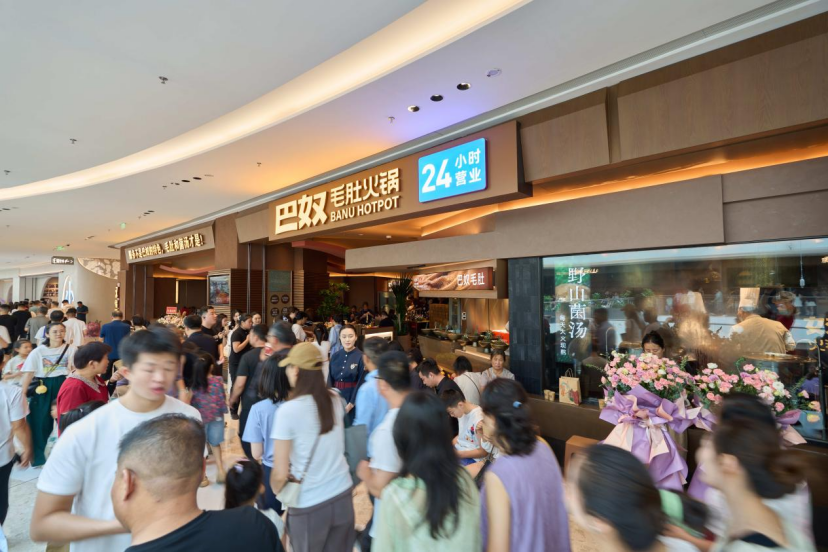
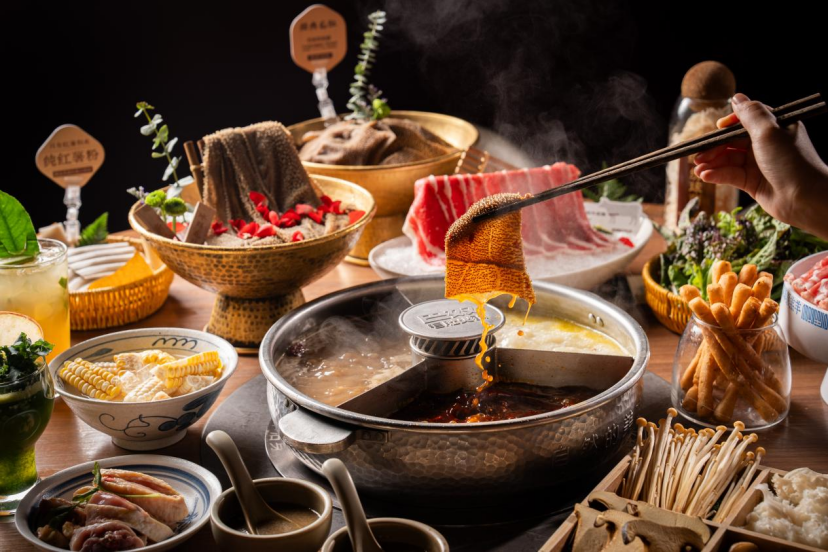
For years, Banu has invested heavily in product innovation and supply chain upgrades, building a full-cycle ingredient supply system. Its signature original creations—including Hand-Shredded New Zealand beef tripe, freshly simmered wild mushroom soup sourced from the Yunnan-Guizhou Plateau, soybean sprouts and hand-pulled noodles—have broken the traditional confines of Sichuan-style hotpot. Backed by robust product strength, Banu outlets consistently draw large crowds with long waiting lines. This market popularity proves consumers' recognition of premium hotpot.


According to Banu's latest prospectus and Frost & Sullivan research, the brand has climbed from the third to the second place in China's overall hotpot market rankings. In 2025, it posted total revenue of RMB2.846 billion, a year-on-year increase of 23.4%, with the adjusted profit surging 88.7% year-on-year to RMB320 million. Regarding store operations, its table turnover rate reached 3.6 times per day in 2025, up approximately 0.4 times daily year-on-year, while store operating margins remained well above industry averages.


As of July 2026, Banu operates over 200 directly managed stores across 57 cities nationwide. New store openings rose year after year from 2023 to 2025, hitting 25, 35 and 44 respectively, reflecting an accelerating expansion pace.

图片3.png


Long-awaited Opening Will Reshape Hong Kong's Hotpot Landscape


The industry holds high expectations for Banu's Hong Kong expansion. For decades, Hong Kong's Chinese hotpot market has been dominated by locally adapted flavors and luxury seafood hotpot, with a notable absence of leading premium hotpot brands from the mainland. Banu's arrival will fill the gap in mid-to-high-end premium Chinese hotpot segment and break the industry's entrenched market structure.


Zhu Danpeng, vice chairman of the Guangdong Provincial Food Safety Promotion Alliance, commented that Banu, by leveraging its robust, end-to-end supply chain and standardized, granular full-chain management, has boosted quality, cut costs and raised efficiency, and has created unrivalled core barriers that smaller competitors in the premium hotpot segment struggle to replicate.


As Banu seeks a Hong Kong IPO, the city serves as more than an entry point into the broader global market, but more importantly a strategic arena to demonstrate the brand's strength and validate its cross-border operational capabilities to international investors.


Catering industry analysts add that the entry of Banu and other Chinese mainland brands will not only broaden dining choices for local people but also drive the sector to shift toward quality-led competition, with particularly positive implications for supply chain management and the promotion of healthy dining concepts. As Hong Kong diners attach greater importance to ingredient traceability and healthy cooking, the local consumption trends resonate strongly with Banu's core tenets: "natural ingredients with zero unnecessary additives; fresh produce made the same day with no overnight stock."


Wong Sze Man, head of Tourism and Hospitality at Invest Hong Kong (InvestHK), stated that Hong Kong offers an optimal testbed for catering brands pursuing globalization, thanks to a diverse consumer base that helps to gauge market reception of new food concepts and massive flows of international tourists that facilitate organic word-of-mouth marketing. "Hong Kong people love novelty and are eager to try new restaurants and dishes," she noted, adding that brands offering strong value and outstanding dining experiences hold greater growth potential.


Many Hong Kong food enthusiasts have voiced long-standing anticipation for a local Banu store on social media platforms. "I queue up every time I go to Shenzhen; now I can finally enjoy it without needing to cross the border," one user wrote. Others noted that Banu's premium beef tripe and rich mushroom soup are "hard to match" by any local hotpot restaurant. Many young consumers highlighted the brand's late-night dining service as a major draw. Food bloggers regularly label Banu's Shenzhen restaurants "a new landmark for late-night meals" and hope the Hong Kong store will offer similarly late-night service.


图片2.png


Web editors: Shen Jianqi, Zhang Rui

share

Chinese Mainland's Premium Hotpot Brand Banu to Unveil Its First Store in Hong Kong

HICC2026-07-27 15:54

Banu, the premium hotpot brand from Chinese mainland, is poised to enter the Hong Kong market.


Banu's inaugural Hong Kong store is situated at Hysan Place in Causeway Bay's prime commercial district, scheduled to open in mid-November this year. As Banu's first foray outside mainland, the new store will not only bring the brand's product-centric philosophy to Hong Kong consumers, but also mark the official kickoff of its global expansion strategy.


图片4.png


Becoming a Premium Hotpot Brand by Prioritizing Product Quality Over Price and Service


While most hotpot brands are caught in homogeneous competition and clash head-on over service and value-for-money, Banu has been committed to a product-centric philosophy over its 25 years of development since being founded in 2001.


According to statistics from Frost & Sullivan, Banu is the largest revenue-generating brand in China's premium hotpot segment (defined as those with an average customer spend of over RMB120). Driven by its uncompromising focus on product quality, Banu has long held this top position with a consistently leading market share. Unlike mass-market hotpot chains that rely on traffic-driven tactics, Banu remains committed to quality ingredients, original recipes and stringent quality control, carving out a distinct path of "building the brand with products and winning the market with quality"—and emerging as a symbol of high-end premium hotpot in Chinese mainland.


For years, Banu has invested heavily in product innovation and supply chain upgrades, building a full-cycle ingredient supply system. Its signature original creations—including Hand-Shredded New Zealand beef tripe, freshly simmered wild mushroom soup sourced from the Yunnan-Guizhou Plateau, soybean sprouts and hand-pulled noodles—have broken the traditional confines of Sichuan-style hotpot. Backed by robust product strength, Banu outlets consistently draw large crowds with long waiting lines. This market popularity proves consumers' recognition of premium hotpot.


According to Banu's latest prospectus and Frost & Sullivan research, the brand has climbed from the third to the second place in China's overall hotpot market rankings. In 2025, it posted total revenue of RMB2.846 billion, a year-on-year increase of 23.4%, with the adjusted profit surging 88.7% year-on-year to RMB320 million. Regarding store operations, its table turnover rate reached 3.6 times per day in 2025, up approximately 0.4 times daily year-on-year, while store operating margins remained well above industry averages.


As of July 2026, Banu operates over 200 directly managed stores across 57 cities nationwide. New store openings rose year after year from 2023 to 2025, hitting 25, 35 and 44 respectively, reflecting an accelerating expansion pace.


图片3.png


Long-awaited Opening Will Reshape Hong Kong's Hotpot Landscape


The industry holds high expectations for Banu's Hong Kong expansion. For decades, Hong Kong's Chinese hotpot market has been dominated by locally adapted flavors and luxury seafood hotpot, with a notable absence of leading premium hotpot brands from the mainland. Banu's arrival will fill the gap in mid-to-high-end premium Chinese hotpot segment and break the industry's entrenched market structure.


Zhu Danpeng, vice chairman of the Guangdong Provincial Food Safety Promotion Alliance, commented that Banu, by leveraging its robust, end-to-end supply chain and standardized, granular full-chain management, has boosted quality, cut costs and raised efficiency, and has created unrivalled core barriers that smaller competitors in the premium hotpot segment struggle to replicate.


As Banu seeks a Hong Kong IPO, the city serves as more than an entry point into the broader global market, but more importantly a strategic arena to demonstrate the brand's strength and validate its cross-border operational capabilities to international investors.


Catering industry analysts add that the entry of Banu and other Chinese mainland brands will not only broaden dining choices for local people but also drive the sector to shift toward quality-led competition, with particularly positive implications for supply chain management and the promotion of healthy dining concepts. As Hong Kong diners attach greater importance to ingredient traceability and healthy cooking, the local consumption trends resonate strongly with Banu's core tenets: "natural ingredients with zero unnecessary additives; fresh produce made the same day with no overnight stock."


Wong Sze Man, head of Tourism and Hospitality at Invest Hong Kong (InvestHK), stated that Hong Kong offers an optimal testbed for catering brands pursuing globalization, thanks to a diverse consumer base that helps to gauge market reception of new food concepts and massive flows of international tourists that facilitate organic word-of-mouth marketing. "Hong Kong people love novelty and are eager to try new restaurants and dishes," she noted, adding that brands offering strong value and outstanding dining experiences hold greater growth potential.


Many Hong Kong food enthusiasts have voiced long-standing anticipation for a local Banu store on social media platforms. "I queue up every time I go to Shenzhen; now I can finally enjoy it without needing to cross the border," one user wrote. Others noted that Banu's premium beef tripe and rich mushroom soup are "hard to match" by any local hotpot restaurant. Many young consumers highlighted the brand's late-night dining service as a major draw. Food bloggers regularly label Banu's Shenzhen restaurants "a new landmark for late-night meals" and hope the Hong Kong store will offer similarly late-night service.


图片2.png


Web editors: Shen Jianqi, Zhang Rui