Luxembourg robotics project takes root in Zhengzhou Airport Economy Zone
Signed in September 2025, the Luxembourg-based robotics project broke ground for construction that December, with its first batch of products rolling off the production line this June. The initiative has borne fruit in less than a year at the Zhengzhou Airport Economy Zone (ZAEZ).
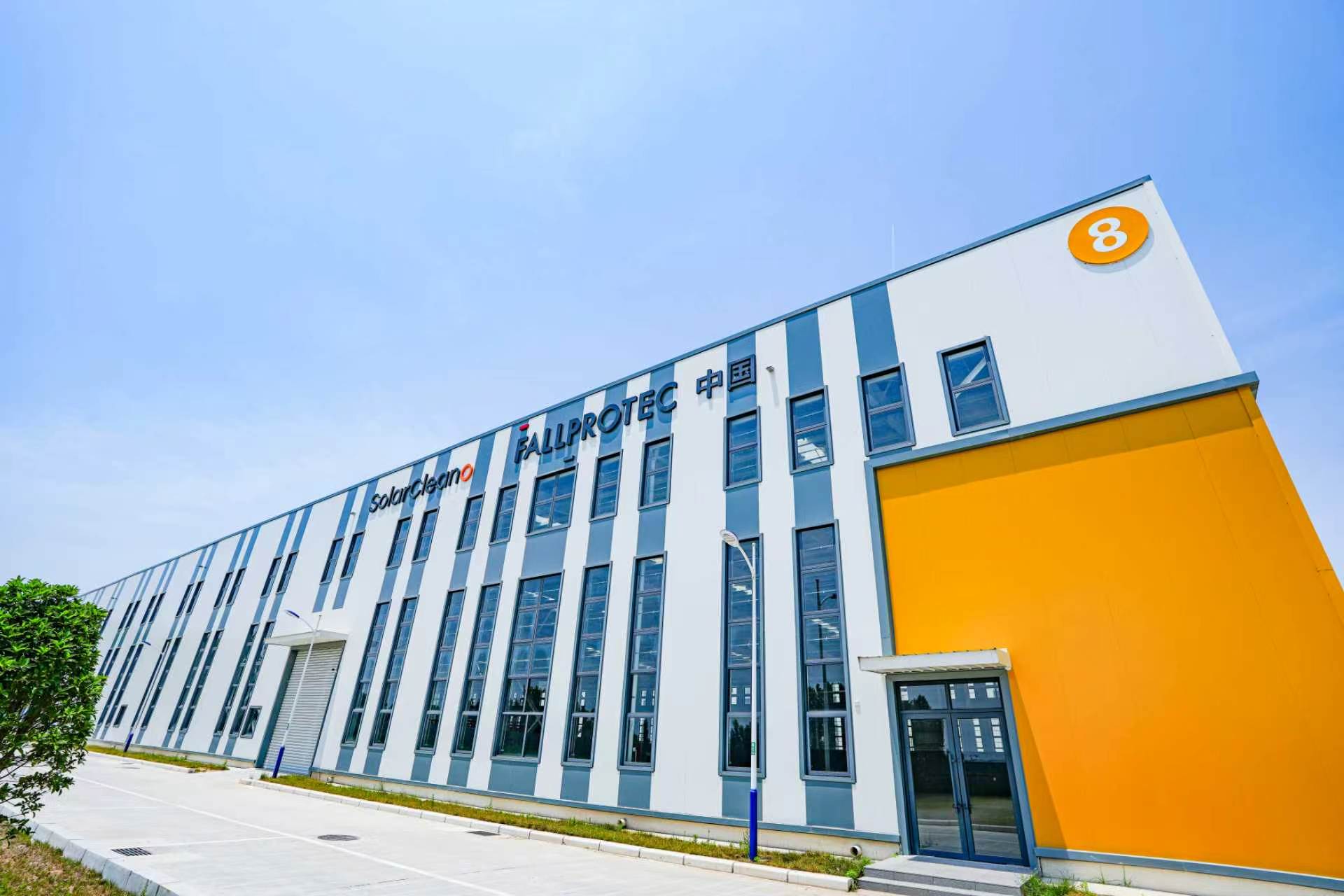
This Luxembourg-based R&D and manufacturing firm is called SolarCleano. Its brand name combines "solar", meaning solar energy, and "clean", referring to cleaning. As the word suggests, the company specializes in developing robots for photovoltaic panel cleaning.
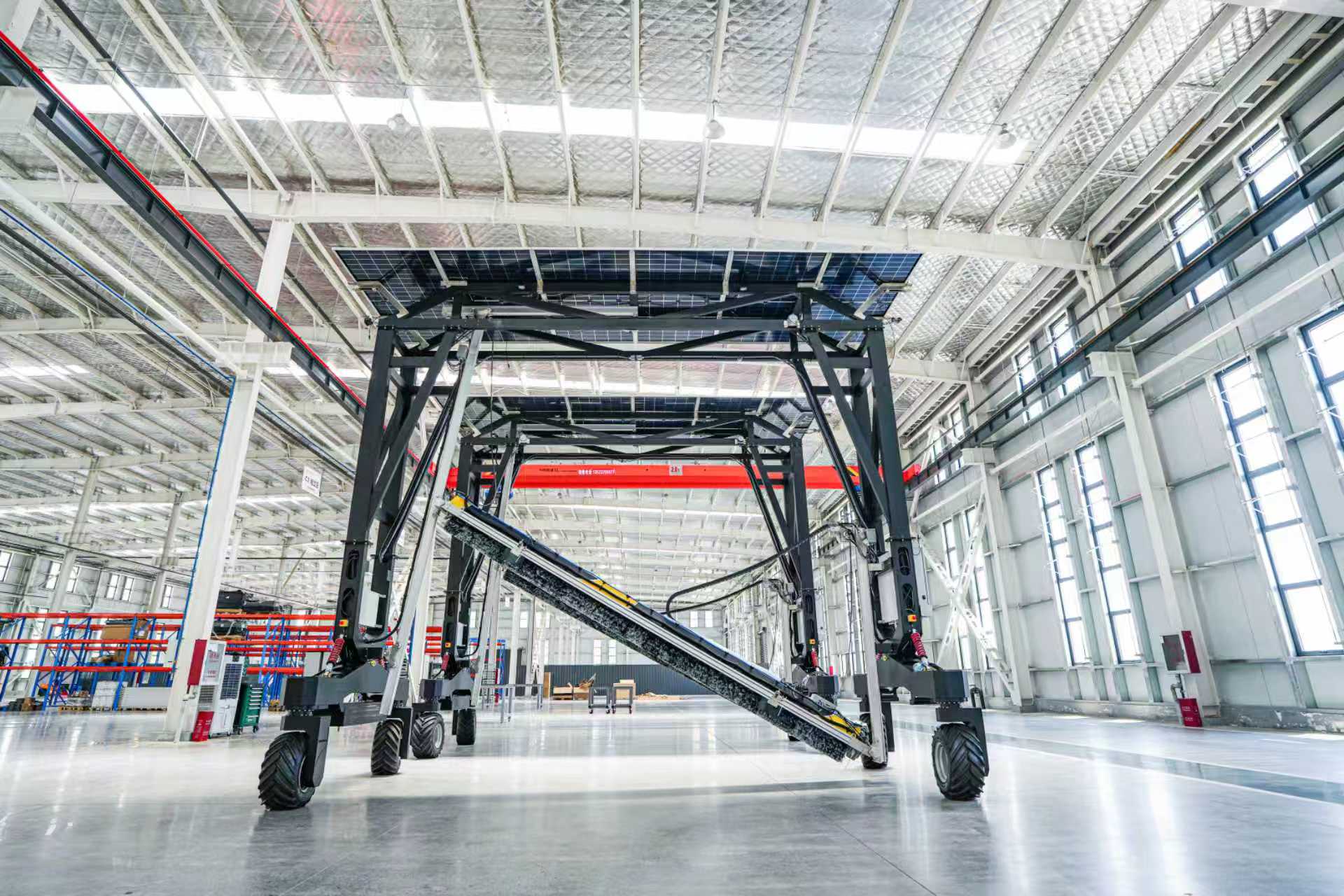
Recently, reporters from Dahe Fortune Cube visited Kunda Industrial Park in the ZAEZ, where two newly upgraded Model C1 large-scale photovoltaic operation and maintenance robots had just come off the assembly line. Standing roughly 7 meters tall and 6 meters wide, the robots feature a structural frame resembling a giant steel gate, enabling them to traverse solar panels for cleaning operations.
To witness the debut of these two robots manufactured on Chinese production lines for the first time, Christophe Timmermans, Chief Executive Officer of SolarCleano, traveled all the way from Luxembourg to the project site. He told reporters from Dahe Fortune Cube that the core competitive edge of this product lies in its capacity for autonomous cleaning at ultra-large-scale power stations. A single robot can clean up to 15 megawatts of solar panels per day, a capability unprecedented in the market.
It is learned that these two massive machines operate fully automatically with a cleaning efficiency exceeding 99.5%, delivering end-to-end automated solutions for complex terrain such as desert and Gobi regions in northwest China.
Shi Xianjun, General Manager of SolarCleano (China), shared with Dahe Fortune Cube that the model has just completed an upgrade. "This large robot is undergoing a transition toward supply chains of domestication. We expect to finish assembling 20 to 30 units by the end of this year, with a plan to deliver over 500 robots worldwide in the next three years."
China's photovoltaic industry has maintained robust growth. By the end of April this year, the country's installed solar power capacity reached 1.25 billion kilowatts, a year-on-year increase of 26.2%. The market for photovoltaic panel cleaning boasts broad prospects.
This is precisely why SolarCleano chose to establish manufacturing operations in China — the country's enormous market potential drove its decision to build a local factory.
Back in 2023, SolarCleano made initial inroads into the Chinese market and set up its China regional operation division. Now, with its first overseas production base settled in the ZAEZ, the company has taken a pivotal step in its global expansion.
What made Henan its chosen location? The cooperative foundation built by the Zhengzhou-Luxembourg Air Silk Road stands as a decisive factor.
Christophe Timmermans noted the close ties between Luxembourg and Zhengzhou, including direct air flights between the two places. "Most importantly, we were deeply impressed by the warm reception from the ZAEZ team during our inspection tour. They showed us multiple potential factory sites, from which we selected the optimal one."
Shi further elaborated on the three major advantages that drew SolarCleano to ZAEZ: unimpeded opening-up channels, remarkable market value, and a sound business environment. The zone is equipped with full-fledged port functions, a bonded logistics system and complete cross-border trade supporting facilities. It can rapidly cover the domestic Chinese market while leveraging its air route network to radiate across Europe and Asia, perfectly matching the company's global supply chain layout.
"The Chinese market is undergoing a transformation, evolving into a country with genuine independent innovation capabilities," Christophe Timmermans remarked. "Through the SolarCleano project, we aim to leverage China's resource strengths to further advance our product development and integrate cutting-edge technologies into our photovoltaic robots." (Reporters: Cheng Shuaixing, Zhang Keyao; Intern: Meng Qirui; Translator: Cui Wenqi)
Web editors: Shen Jianqi, Zhang Rui